

What the hell is a retrofit?
It’s a fair question.
Because unless you’re in the industry, it’s not a term most people grow up with. And yet, it tends to come up at exactly the moment you start looking at a home a little differently.
Sometimes that’s after you’ve lived in it for a while.
Other times it’s when you’re considering buying, walking through a place and thinking, this could be great… but it’s not quite there yet.
Too cold.
Too hot.
A bit damp.
A bit dark.
Or just harder to live in than it should be.
That’s usually where the idea of a “retrofit” starts to make sense, even if the word itself doesn’t.
So what is a retrofit?
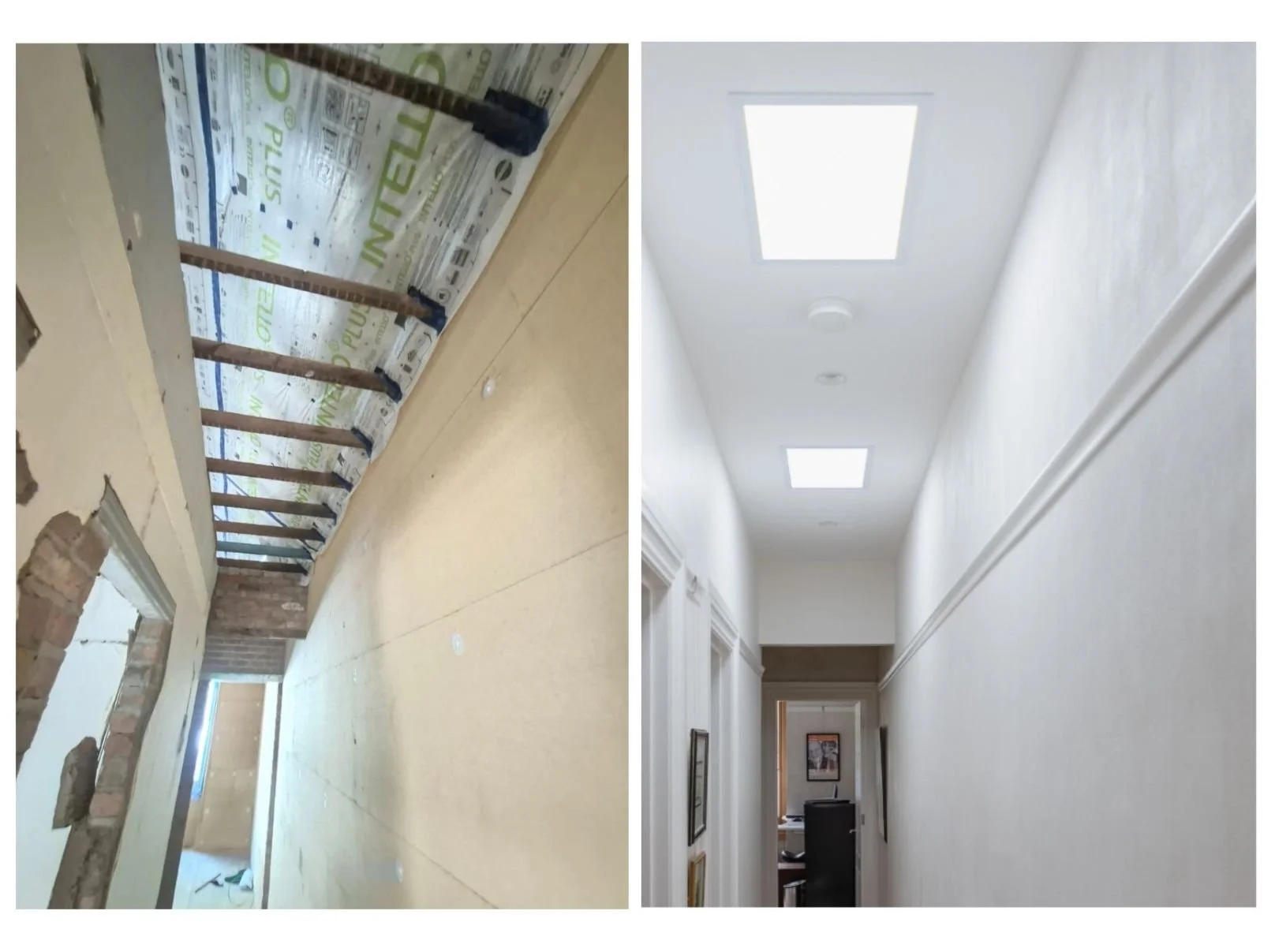
At its simplest, a retrofit is about improving how an existing home actually performs to live in.
Not just how it looks.
Not just how it’s laid out.
But how it feels, day to day.
Does it hold warmth in winter?
Does it stay cool in summer?
Is the air fresh and healthy?
Is it quiet, consistent, and comfortable?
Most older homes and even plenty of newer ones weren’t designed with that level of performance in mind. So while they might look the part, they can fall short where it matters most.
A retrofit is about closing that gap.
It’s also where having done this before starts to matter.
Every existing home behaves differently, different eras, different materials, different problems hiding in different places.
The work isn’t just knowing what to do, but understanding where to look and what actually matters in your particular home.
Why it’s not just “a renovation”
This is where things often get blurred.
We’re all familiar with renovations — new kitchens, bathrooms, opening up spaces, making things look and feel more modern. And those things absolutely have their place.
But they don’t always solve the underlying issues.
A home can look incredible and still be:
Drafty
Uneven in temperature
Prone to condensation or mould
Reliant on constant heating and cooling just to feel okay
A retrofit goes a layer deeper.
It focuses on the parts of the home you don’t necessarily see — but definitely feel.
Things like:
Airtightness and draught sealing
Proper insulation through the walls, floors and roof
Windows and doors that aren’t working against you
Controlled ventilation so fresh air comes in without losing comfort
Efficient systems for heating, cooling and hot water
Electrification and setting the home up for solar and future energy use
On their own, each of these helps.
But it’s when they’re considered together that the home really changes.
It’s not one thing — it’s how everything works together
One of the biggest misconceptions is that a retrofit is a single upgrade.
Add some insulation. Swap a window. Upgrade a system.
And while those things can make a difference, homes don’t work in isolation like that.
What happens under the floor affects the walls.
What happens in the walls affects the roof.
Air, moisture and heat are constantly interacting.
That’s why retrofits are typically approached as a system, a series of decisions that support each other, rather than compete.
This is where most projects either come together… or start working against themselves.
Because without a clear plan, it’s easy to spend money in the wrong places or fix one issue while quietly creating another somewhere else.
When does it make sense?
There’s no single moment.
For some people, it’s after living in a home for years and realising something isn’t quite right.
For others, it’s earlier, during the process of buying or planning changes, when you start to see the potential in a place and want to get it right from the start.
Often, it sits alongside other work:
Renovations
Extensions
Heritage upgrades or restoration
Conservation
Most projects end up being a combination of these, rather than one or the other.
What does it actually change?
This is the part that’s hardest to explain until you experience it.
It’s not just lower energy bills (although that’s part of it).
It’s the way the home behaves.
Waking up in winter and the house hasn’t dropped off overnight.
Walking inside on a hot day and it feels cooler and refreshing.
No condensation on the windows.
No stale air sitting or rooms that are different temperatures.
It’s hard to put into words, it’s just a different kind of ambience.
So where do you start?
Usually, with what you’re already noticing.
The cold spots.
The rooms that don’t quite work.
The sense that the home could be better than it is.
Or even just a feeling, walking through a place, that there’s more potential there, if it’s approached the right way.
You don’t need to have it all figured out.
But having someone help you make sense of it early, before drawings, before decisions are locked in, can change the outcome entirely.
Because once you understand how your home actually works, the path forward becomes a lot clearer.